Excitement!

19 Sep

It didn’t keep me up all night – but I did have to make a phone call before bed so that my brain could rest.

I have a new novel on simmer for this year’s NaNoWriMo: Fallen Fruit. I’m looking at a 10-20 year post-apocalyptic Johnny Appleseed story. I’m inspired by the Jam Economy and the Pacific Northwest, social change and community, hardship and abundance. I’m expecting at least one death, a dark past, lovely times in kitchens, and the lovely sunrise dew and grit of traveling. Also look for my bias toward apprenticeship, the firm belief in structured, meaningful, loving childhoods, and recipes.

Oh yes, there will be recipes. And probably a mule. And maybe a goat? I like goats. But there has to be a balance between mouths to feed and food with which to feed them…

I love this part where a story comes by to visit and lets me get to know it. 🙂

Motivations

15 Sep

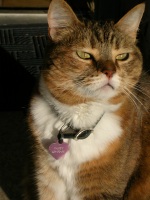
Being an author is a lovely thing: there’s a little piece of my own worldview that is entertaining and informing and delighting different readers. Not to mention, lots of folks seem to find it impressive. But it is fundamentally difficult to concentrate on writing when there are Big. Important. Things. pending – especially when there’s little or nothing I can do to influence those things. Pee suspect and beloved fuzzybutt.
The problem is that not all of the writing life is lovely. There are times when the writing is so drecky I have to start a new page so I don’t have to look at what I just wrote. But when the writing is done, I can celebrate, right? Of course – because otherwise there’d be no momentum left to drag me through the painful work of editing: the pruning, reshaping, bulldozing and knitting of the story together. And all that before shopping the book around, the further editing, publishing, and then the marketing…

Three-quarters of the way through the current novel I have to wonder: what keeps me going? I’ve tried to distill, record and admit my top motivators below:

5. Seeking fame and fortune, just like so many other writers dream of. Do I think these are likely? Absolutely not, but I do think they are possible. That I seek this kind of attention is kind of strange to me; I’ve only recently started to come to terms with it. I’ve always thought that this sort of public ambition is somehow wrong or, at best, déclassé. It turns out I’m a little bit wrong, then.
4. Participating in the act of storytelling. It may seem intangible, but I think it’s a fundamental human need. Other people may need to tell stories that actually happened to their children and friends, or write in their blogs. Some, like my brother and dad, need to tell important ideas by coding software that makes those new ideas possible. We each have points of view to express, and it’s important to me that I express mine.
3. Discipline is good for me. When writing is going well, it’s not that the story is flowing effortlessly. I’m more exhausted after writing 5,000 “easy” words than 1,200 words I had to scratch out of empty brain. But I feel accomplished whichever I manage – and more importantly, perhaps, it makes any other challenge look that much more possible. Can I change careers? Certainly! I’ve written a novel, after all.
2. Any word count is better than “zero.” Even if the quality is sh*t. Even if it didn’t move the story along, or moved it in the wrong direction. Editing improves even the worst storytelling. Sometimes the “wrong” direction turns out to be just what the story needed – like a certain poisonous shrew that was added to Gathering Grace. If Nathan hadn’t added it, while we were at a NaNoWriMo write-in… I’m not sure what would have happened.
1. Whatever else is happening, I get to write. Sometimes “royalties” are more aptly titled “pauperies,” the kids are involved in complex and contradictory teenage dramas, the computer breaks down and the cat is peeing on the rug. I can pursue steadier employment, promote the book, listen to the teenagers, pull out the paper and pencil and clean the carpet – and still, I can write. It means letting everything else go, while I’m writing; but once I do it, I can revel in it. In my story, if nowhere else, I get executive control.

So now that I’ve posted to my blog, I return to the novel. Back to the control, the increasing of word-count, the storytelling, the discipline, and the potential fame and fortune of writing.

Right after I clean up the cat pee.

I am Superman

2 Sep

Have you seen this? As my friend Nathan writes, it’s required watching for the Cape and Cowl set:

But what’s the point? I think it’s all of the following, in order of least to most cynical:

  1. To remind us, as the video says, that Superman is Clark – he is Everyman. We can all achieve great things, even if we are grieving the death of a parent (as Siegel was when he invented the bulletproof man) or are neglected and forlorn (like the house currently is.)
  2. To show that we recognize the importance to US culture of the contributions of Siegel and Schuster as much as HP and other recent cultural landmarks.
  3. To generate publicity for Brad Meltzer’s most recent book.

Anywhere on the list, it’s a cause I can get behind.

The Writing War

27 Aug

I got a rejection letter with a bonus today. It was a company to which I had applied to work writing some documentation; while I didn’t make their final cut for interviews, the person who wrote the email said that the intriguing reviews of my novel inspired her to order it. So one more sale, though one fewer job opportunity.

But what’s the real message I should take away? On the one hand, it’s easy to get discouraged. People are finicky in what they want to read. Most of writing is a solitary endeavor; there’s not much feedback as I’m actually doing the work. It’s not social, or easy, or secure. Success is far more often a function of marketing than artistry, and the market is cutthroat. There’s the perpetual question, too, of “so what have you written lately?”

On the other hand, even though someone wasn’t interested enough to interview me (and boy, do I interview well!), my resume was strong enough to merit research. She had to follow at least one link-within-link, if not two, to read the reviews of Grace. And now one more person is reading it. So I wasn’t the top choice for the job, but who knows whom I was up against? I’m marketing one book against millions of novels, and with one more person I’ve won this particular round.

I think it is not a coincidence that wars and marketing are both waged as campaigns. The message I will take away: It is not the individual sale, large or small, but the accumulation of battles won that makes the difference. One more sale, one more order, one more review.

Today, I’ve got one more – and always one more – book to write.

Brick and mortar, here I come!

22 Aug

Gathering Grace has made its debut in a real brick and mortar store: Balderdash Books and Art, a small independent Seattle (Greenwood neighborhood) bookseller, has a few copies to sell! And it’s just a few doors down from the Wayward, where I’ll be reading from it next Friday evening (August 29th.)

So if you’re in the Puget Sound area: Go! Support a local business *and* a local author, simultaneously!

Why Superheroes?

20 Aug

I have three “in-general” theories about why folks like superheros:

Theory One: I like Good vs. Evil fights because they are so much simpler than the slings and arrows of slogging through every day. Superhero fiction usually revolves around battles between Good and Evil. Even when the line between them starts to gray, redemption lies in redefining it – with Our Hero firmly retaking the higher ground. Wouldn’t it be great to be the Hero to kids, to coworkers, to family and friends? And wouldn’t it be great to do it so easily: (1) Find Evildoer, (2) Smite Evildoer, (3) Smile and Pose. I’ve rarely seen a Superhero worry about offending someone, or how they will pay all their bills, or really want to call someone a nasty name in heavy traffic after work.

Theory Two: For United States Americans, superheroes reinforce some of our favorite cultural traditions. I wrote about this on LinkedIn, in response to a question there. Superman is an orphan, refugee from his destroyed planet, who crashlands on a rural farm — who then makes it to the top of the world! He’s the ne plus ultra of “making it,” with a private retreat home, the attention of the world, and invincible power. (Batman provides an interesting counterpoint to success, however: he is born into wealth, but his parents are killed in random violence. He lives to bring justice to the seamy side, having enough wealth to ‘create’ successful vigilantism instead of innately expressing heroism)

Theory Three: It’s important to remember the accessories: Superheroes get cool costumes and gadgets, but don’t necessarily make you work out the math. Where would Batman be without his utility belt? And how many things can possibly fit in it? In Gathering Grace, Ruth has a special ring, a “magical” golem, and nanoducks – each of which has its own importance to the story. While there has to be enough “science” or context to make the new device understandable, it invites the reader further into the escape. And sometimes, only sometimes, reality eventually surpasses the writer’s imagination. (Remember Dick Tracy’s watch?)

My main interest in Superhero fiction comes from a slightly different source, however: High school. For nine years I was a high-school science teacher, teaching chemistry and physical science in Seattle. I learned a lot during that time – about teaching, group management, writing, communication, assessment… but most importantly, I learned about people.

One day I realized: out of the nearly-thousand students I have taught, I’ve never met someone who is intrinsically boring. To put it another way, there’s been at least one unique and interesting spark in each student who passed through my door or shook my hand at the end of a class.

Not everyone’s talents were obvious in my science classroom, to be sure. However, once I had the image of each student with their own secret sparkyness inside, it was a short step to imagine they could each have secret Superpowers. So what if their sparkyness – their Superpower – wasn’t science?

My basic modus for handling recalcitrant students fundamentally changed: everyone has the right to their secret identity, after all. Perhaps he is a genius in history, I reasoned, so he needs other reasons to engage in Physics. I guess it’s not too surprising that the connections I was making to my students started improving by leaps and bounds.

After living with this revelation for a long while, I have to ask myself: do I believe in Superpowers? The answer is guarded: the Superpowers that people attribute to themselves are not always correctly identified.  But I do believe that each person has an interior sparkyness, some unique talent that may be known or undiscovered. I’d call that a Superpower, any day.

Public Reading by the Cape and Cowl Collective

19 Aug
The Cape and Cowl Collective

The Cape and Cowl Collective

Did you know I’m a co-founder? It’s true – author Nathan Crowder and I have joined forces to create the Cape and Cowl Collective. It’s a group for those who write, read, and support fiction with Superhero themes, like my Gathering Grace. Nathan and I will be reading from our novels August 29th at 8pm at the Wayward Coffeehouse – please join us!

Post One: Torreybird’s a Writer

14 Aug

“There’s no secret handshake.”

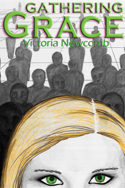
This is the phrase that most sticks with me from my first professional event as an author. I had written a novel, gotten it published, and now I’m trying to get people interested in it. Gathering Grace has its own website, it’s listed on Amazon, and available from bookstores and the publisher – but it’s not enough! Not by a long shot.

I’m finding that selling the book is harder than writing it.  Gathering Grace’s independent publisher has a respectable non-fiction catalogue, but Grace is their first novel. It’s been a learning process all around! Reviewers would have preferred to see it pre-publication. Some booksellers wonder why they’ve never heard of it before. Others are having trouble getting it from the distributor. Some think the cover is poorly produced, and others wonder where to shelve it: with SF? Fantasy? YA? Adult?

There is a definite limit on what I can do. The distribution issues are up to the publisher. I can promote to different reviewers, but it is up to them to read, enjoy, and write about my book. I can do readings, signings, attend conventions and conferences, write this blog… and get the book in front of people as often as possible. If people enjoy it, terrific! Hopefully they’ll recommend it to their friends, give it as a gift, and review it on a public site (like Amazon or GoodReads.)

But there is still “no secret handshake” when it comes to being a successful author. So what can I do? Well, all of the above – but that leaves out the most important part. I started writing because I love to write. Grace was written as part of NaNoWriMo 2006, at a time when I desperately needed to be doing something I loved. My next novel was written in 2007 – and it’s terrible, and part of it I wrote in a post-surgical haze of pain and medication. (It is still in hiding, dreadfully ashamed of itself.) As I write this post, I’m working on a SF novel involving interplanetary travel, a disaffected chemistry teacher, and an alien wall.

Why SF (science fiction)? Because my earliest experience with novels was the “juvenile” novels of Robert Heinlein, and I’ve never lost my taste for them. Sometimes, it’s easier to tell a good story when the reader has already suspended disbelief. Sometimes, it’s easier to reveal a truth when it’s surrounded by the comforting cocoon of this can’t happen here.

More importantly, though: when I go to read a book, I want a story. I don’t want high-falutin’ narratives, or vivid descriptions of undulating hills (see Thomas Hardy), or most fiction that I’ve had handed to me as “literature.” I want dialogue, action, and character transformation. Often, I want heroes and villains and the compromises that each will make. Relationships, opportunities, and conflicts drive the plots, and there should be a satisfying ending – even if it makes me cry. So that’s what I try to write, when I’m writing fiction.

So what will be in this blog? Here’s the plan:

  • Progress notes on my current project(s), when the story is soaring or crashing
  • New ideas about what might make it into a story, someday
  • Answers to questions like, “Doesn’t Heisenberg preclude…?” or “What would be involved in marketing to both YA and adults, simultaneously?”
  • News about when, where, and how I’ll be making professional public appearances
  • Thoughts on current bookly and writerly happenings
  • (Perhaps I should include thoughts on the misuse of “-ly” in adjective creation…)

I’m planning on writing at least weekly, if not more frequently. Please feel free to email (torreybird at gmail), visit my other websites (www.torreybird.com, www.gatheringgracebook.com), and comment on posts.

Thank you for reading,

and please buy my book,

Victoria “Torrey” Newcomb